
You may also need a minimum opening deposit if the bank requires one. Minimum deposit requirements can depend on the type of business account and whether you’re opening the account at a traditional bank, credit union, or online bank. In addition, sole proprietorships can be more difficult to finance than other types of businesses. For these reasons, it is important to carefully consider all pros and cons before deciding to form a sole proprietorship.
Integration with Business Operations
If you’re using tax filing software, you may have the option to organize and store receipts electronically. Note that an LLC can also elect to be taxed as a Corporation, paying the corporate tax rate. This is not always advantageous but in select cases may work well as part of a broader tax strategy. It is important to reconcile bank statements and credit card statements every month. Be aware of the frauds always and check forensic accounting inventory. In addition, https://www.bookstime.com/ an accountant can provide valuable insights into LLC finances, helping LLCs to make sound financial decisions.
Professional Tax Preparer Certification Course
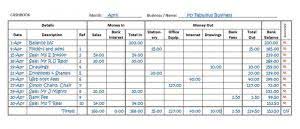
Businesses have the option of choosing physical documentation or a cloud-based service. Business Checking Account – For the business to receive customer payments and pay business expenses. The size of the business plays a crucial role as smaller companies may find it more beneficial to outsource due to limited resources and expertise internally. Conversely, larger businesses might opt for in-house bookkeeping because they have sufficient resources and prefer greater control over their financial operations. Utilizing digital tools or software solutions can streamline expense tracking significantly. These tools not only make it easier to record and categorize expenses but also provide valuable insights into spending patterns over time.
Tracking Income and Expenses

Moreover, these tools often come with built-in analytics capabilities that enable business owners to gain insights into their company’s financial performance over time. This empowers them to make informed decisions based on real-time data rather than relying on outdated or incomplete information. For example, using cloud-based accounting software allows LLC owners to access real-time data from anywhere, enabling them to make informed decisions about expenditures promptly.
How should a business’s expenses be tracked?

One of the first steps you should take is to set up a business entity, and many accounting firms choose to operate as an LLC or limited liability company. There are many bookkeeping and accounting hidden secrets you need to know. To tell QuickBooks what your accounting preference is between cash and accrual, click on the same “Accounting” menu. You can then select “Cash” or “Accrual.” Many businesses choose the cash-basis accounting method since it immediately tracks income and expenses. Many LLCs start with cash basis because it’s simpler, then transition to accrual as revenues increase over $1-5 million. Accrual better matches income and expenses to time periods and is required for audited financial statements.
Members of an LLC have limited liability without the stress of running a corporation. This means members are free from some financial risks, such as when consumers may be unhappy and sue the company. This means double taxation does not occur for the LLC and its members. Moreover, the complexity of accounting tasks is another important factor influencing this decision. On the other hand, unearned revenue in-house bookkeeping provides greater control and customization of processes according to the company’s specific needs. It allows for direct supervision of the accounting tasks and immediate access to financial data.
- Therefore, the ideal choice will depend on an individual’s specific business needs and goals.
- Here’s what you should do to set up your LLC accounting properly and avoid similar missteps.
- This blog post delves into the essential aspects of accounting specific to Limited Liability Companies (LLCs) including business accounts, financial reporting, and general ledger.
- This method is straightforward and suitable for smaller businesses that don’t have significant inventory or equipment involved in their finances.
- FICA requires LLCs to pay self-employment taxes and contributions toward Medicare and Social Security.
- Neglecting accounting can have severe consequences for an LLC, including tax penalties, legal issues, and even dissolution of the business structure.
Those errors are moving your money around without the right documentation, and failing to file the appropriate forms with your state or with the federal government. Another, even more grievous pitfall is using personal assets to pay business expenses, or vice versa; this can truly damage your LLC’s legal standing. Small business owners often find it helpful to maintain a separate General Ledger for each business they own. This helps them keep track of business accounts and income and expenses. Accounting software also helps in maintaining accurate records of income and expenses.
In evaluating a company, investors, creditors, and other stakeholders use llc bookkeeping financial statements to gain a better understanding of the LLC’s financial health. Online bookkeeping services present innovative ways of maintaining large volumes of financial records and even offer other services, such as an automated invoicing system. Financially and legally, an LLC is a separate business entity, which means business transactions should never mix with personal ones. Compared to other business structures, limited liability companies are quickly gaining popularity among many small business owners. LLC Accounting plays a critical role in running a business by helping track income and expenses and enabling statutory compliance.

Setting up payroll can seem like a daunting task, but it doesn’t have to be. As a business owner, it’s important to keep track of your business costs. This will allow you to see where your money is going and make sure that you’re not overspending. Suddenly, you realize that you’re no longer a one-person operation – you’re a business. And as a business, you need to start thinking about things like liability and taxes.